Material Reuse & Circularity
Two trainings around material · Reuse (Bellastock) & raw earth (AMACO)
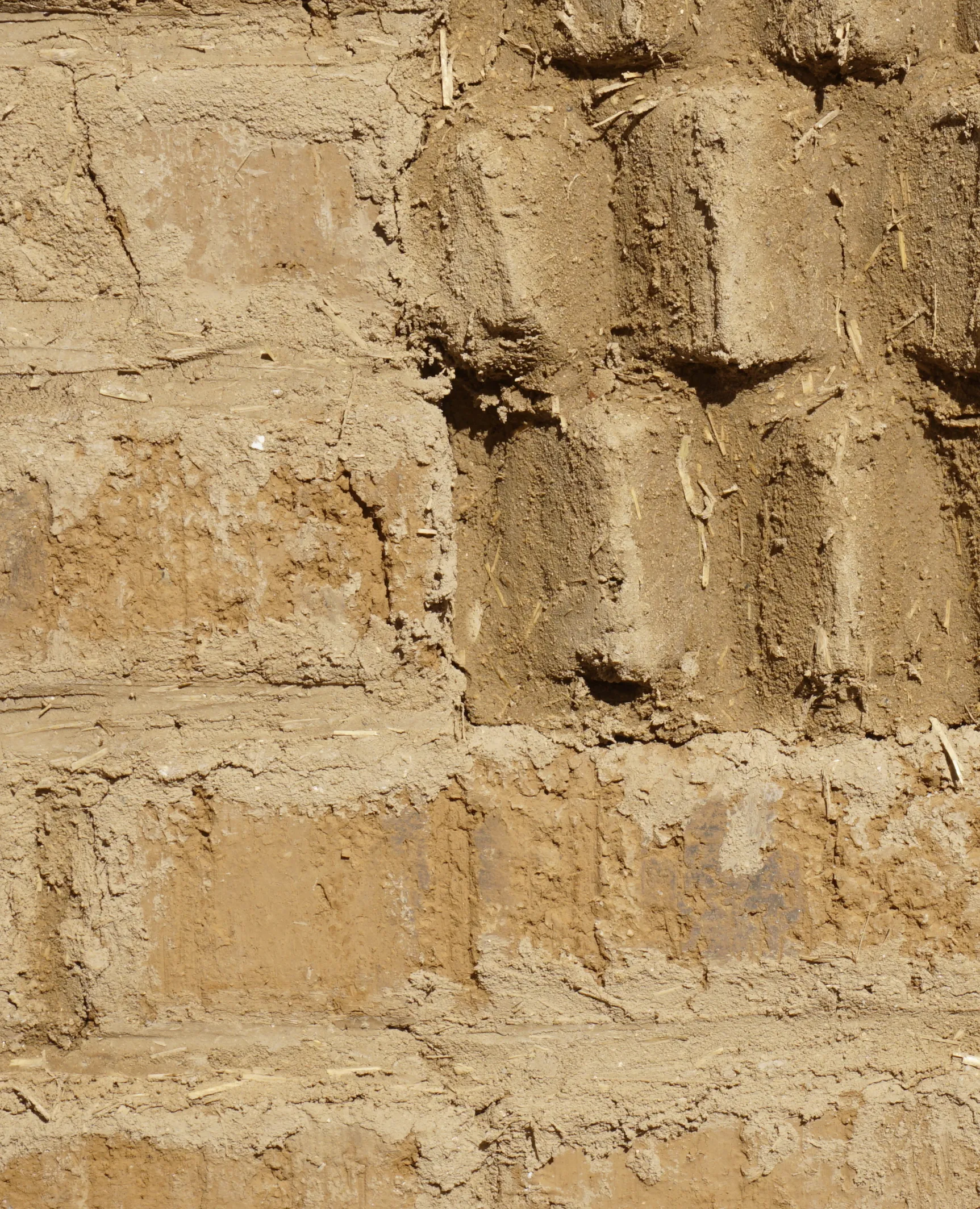
A taste for material
Above all I am drawn to material, and even more to the materials that lighten the environmental impact of construction: those that save resources, reuse what already exists, or are taken straight from the ground. That is what links two complementary interests here, reuse and raw earth.
I also love material worked by hand. These approaches call for a more craft-based way of building and a real presence on site: hands in the earth, time in the workshop, making things yourself. That is exactly what I enjoy, designing while staying in contact with the material.
Reuse: theory and practice
In 2023 I took a one-week certified training in material reuse, at Les Grands Ateliers in Villefontaine, led by Bellastock. Theory and practice answer each other there: how to carry reuse through an architectural project, from the resource diagnosis to the requalification of materials, down to the often-overlooked question of guaranteeing the works.
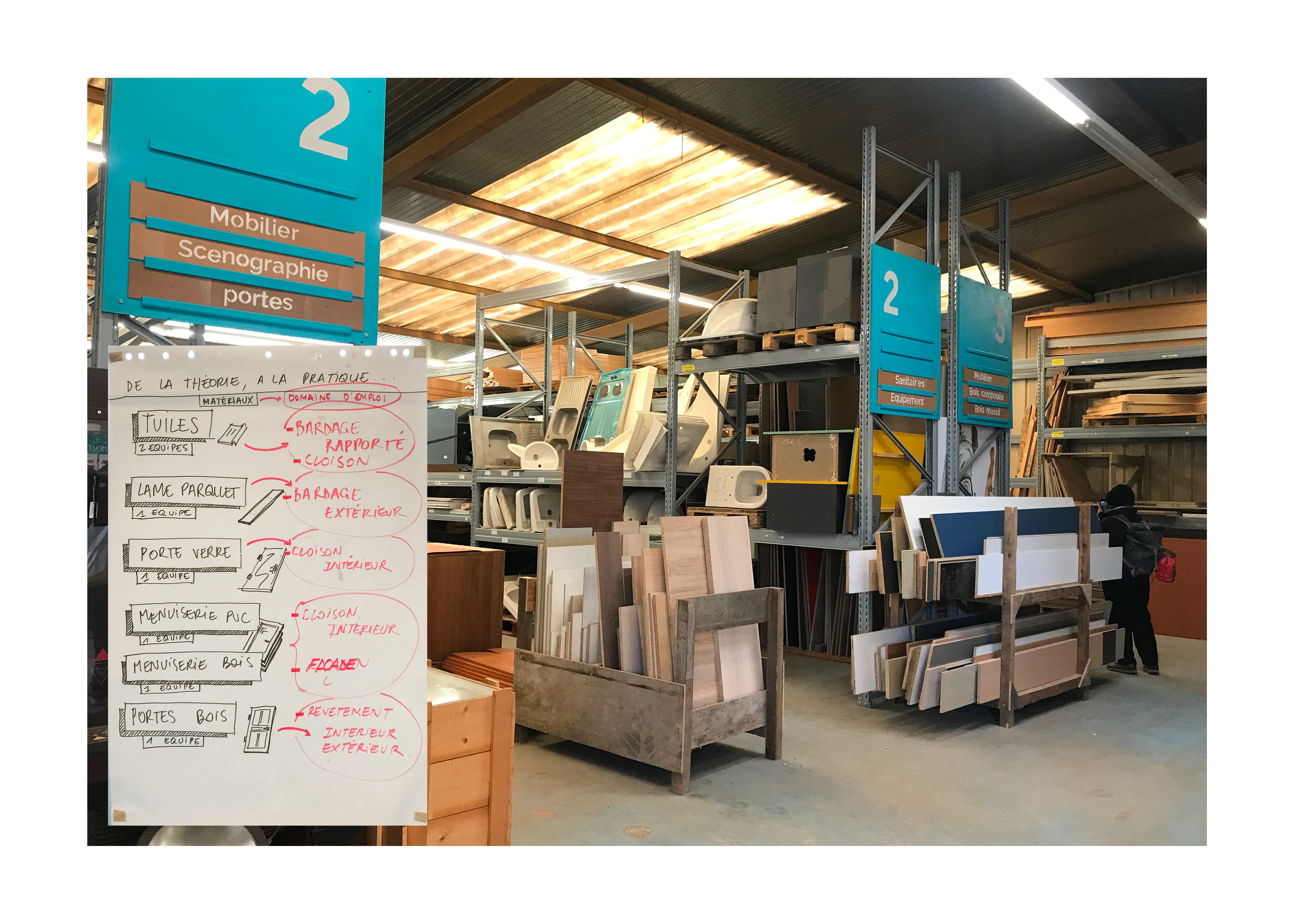
The stock at Mineka, and the mapping of each material to a use.
In the workshop, split into small groups, each team was given the stock of one material to transform. I was in the tile team, with a mission: to turn them into an attached cladding. From the stock we were given, we had to devise the method and test it on the spot: sorting, cleaning, then trying different fixing systems and tile layouts.
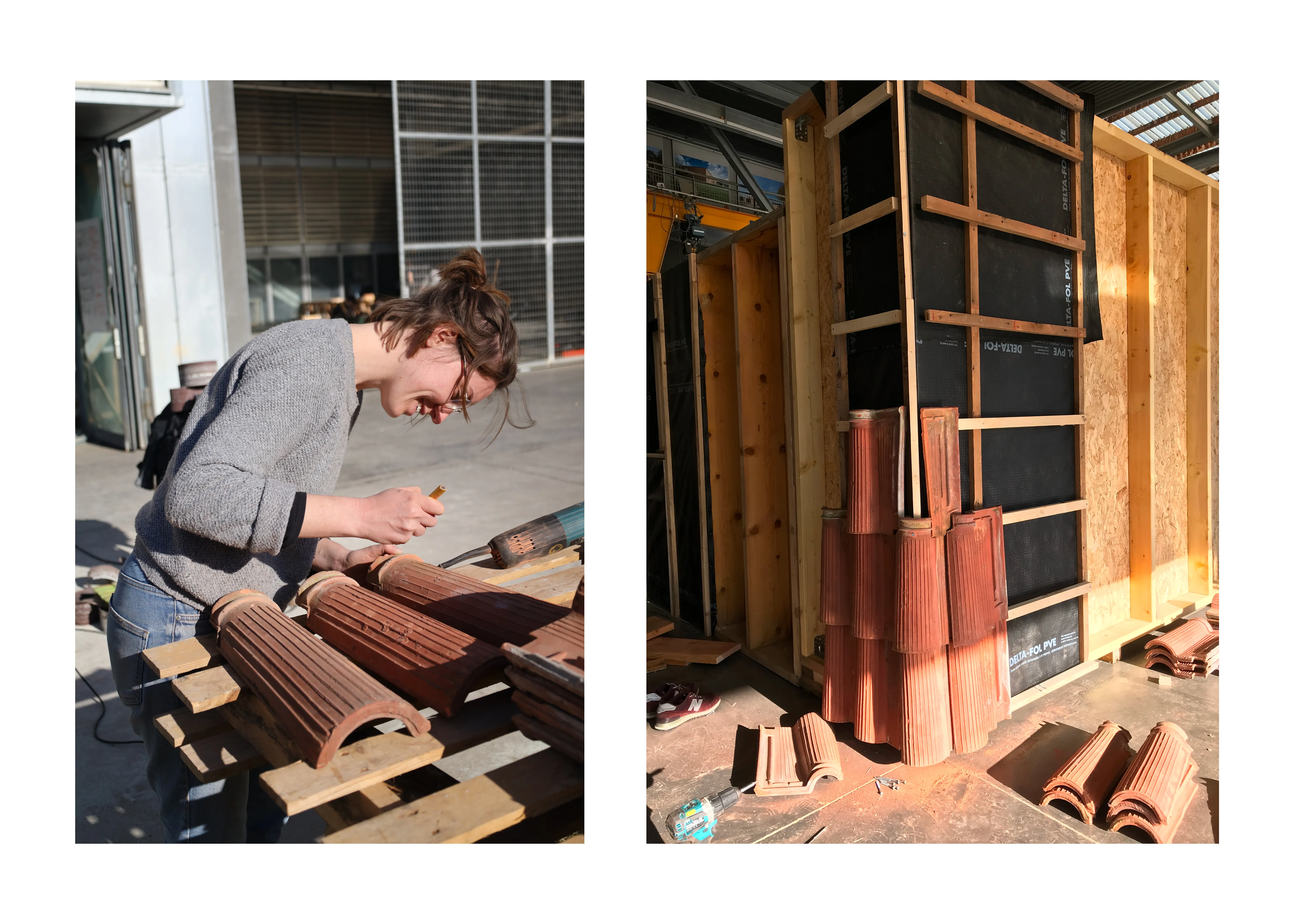
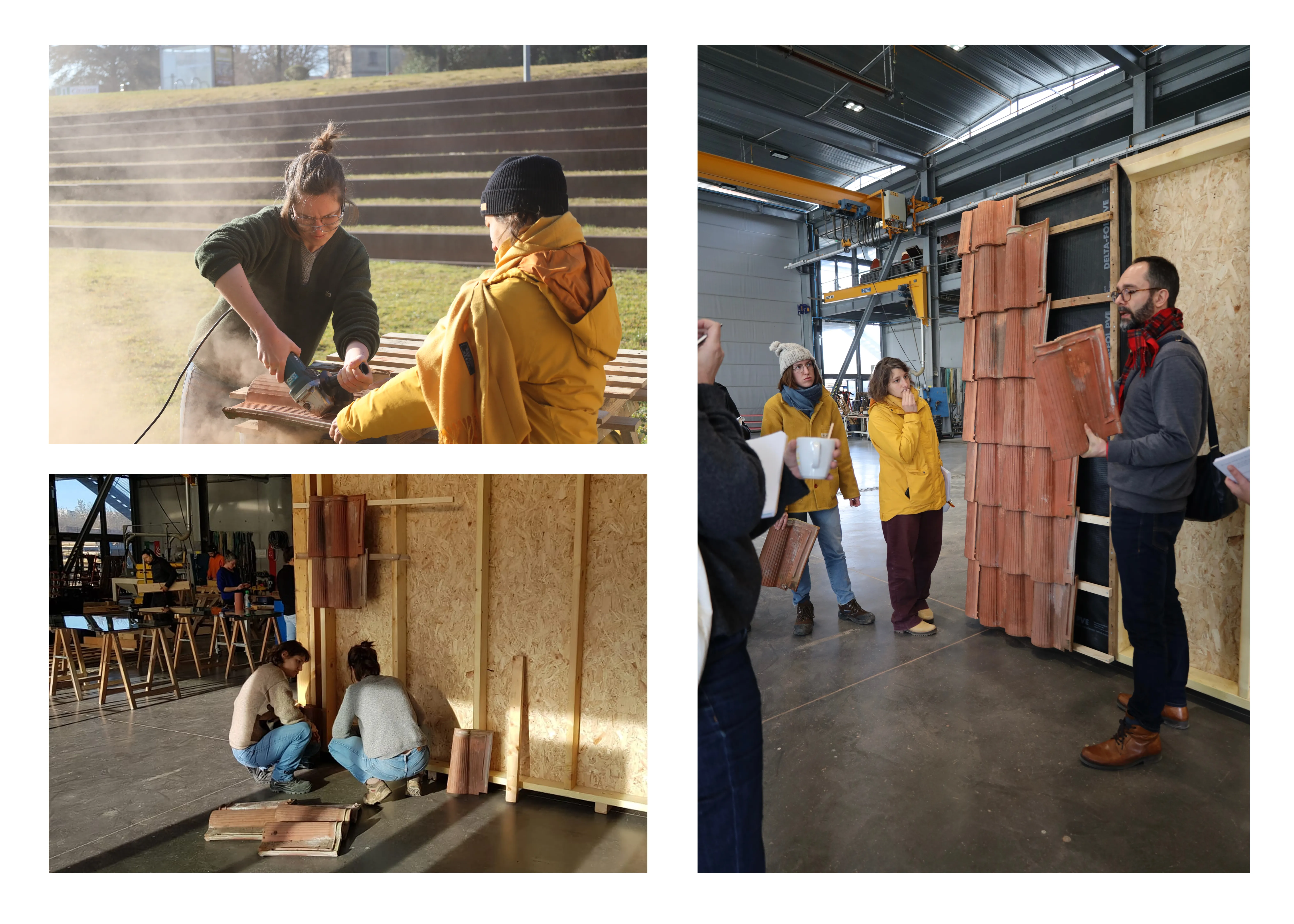
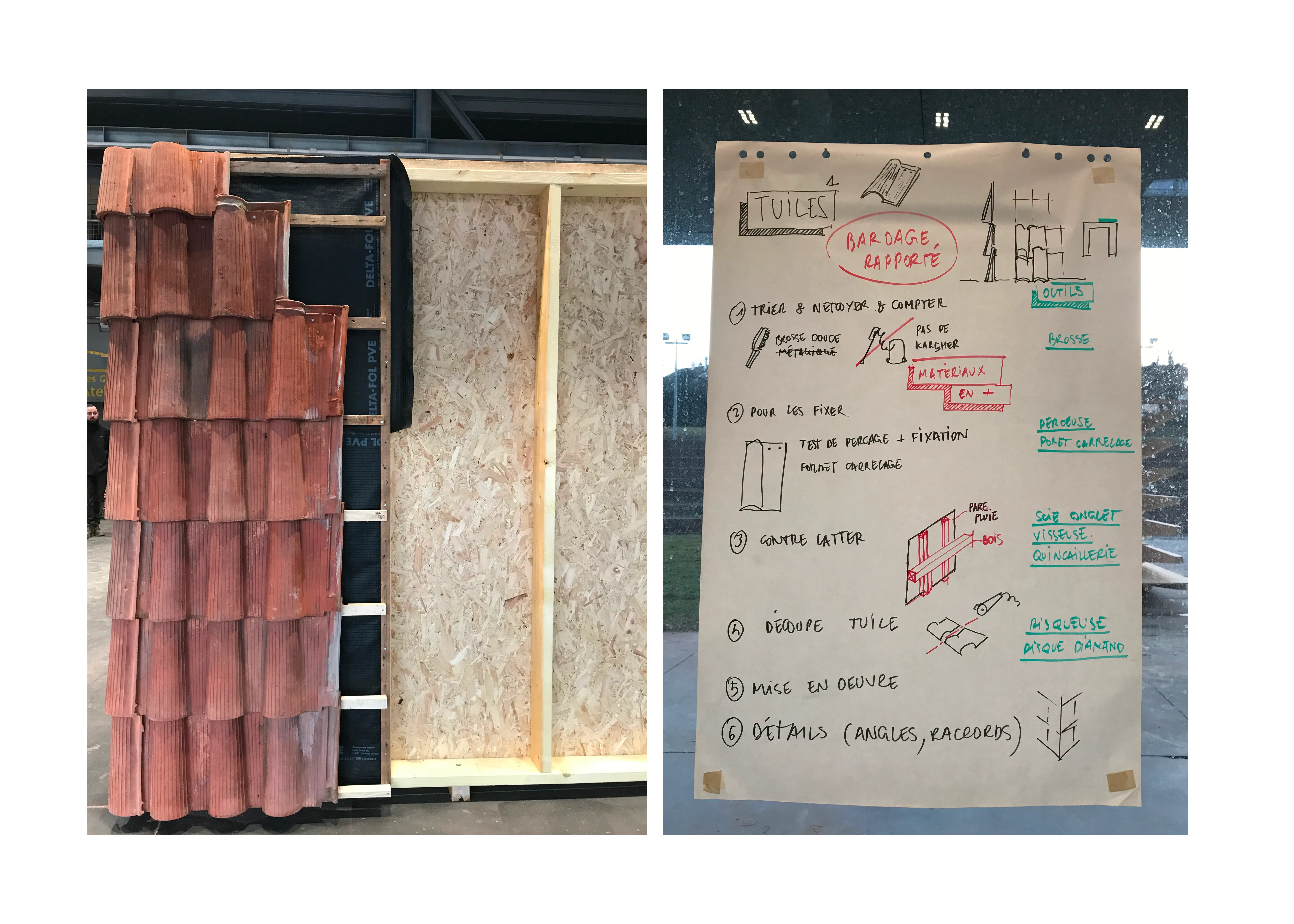
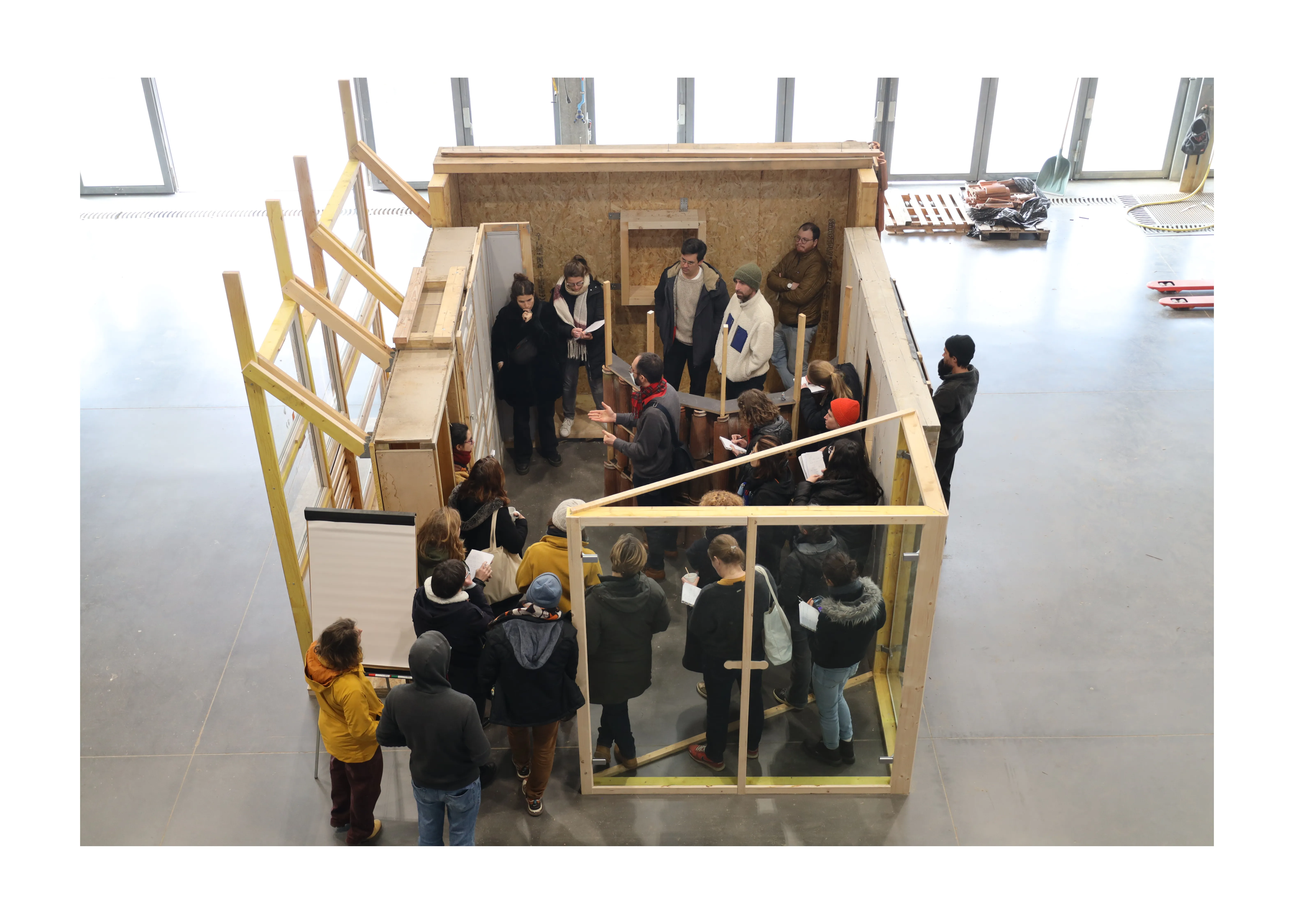
Reuse training · Bellastock, Les Grands Ateliers (2023).
Raw earth
Raw-earth construction is another practice I'm very drawn to, and I had the chance to take a workshop run by AMACO in 2023. Raw earth has this magical quality of being a hyper-local, abundant resource that needs no firing or complex site works, and whose long history blends different techniques from region to region across France.
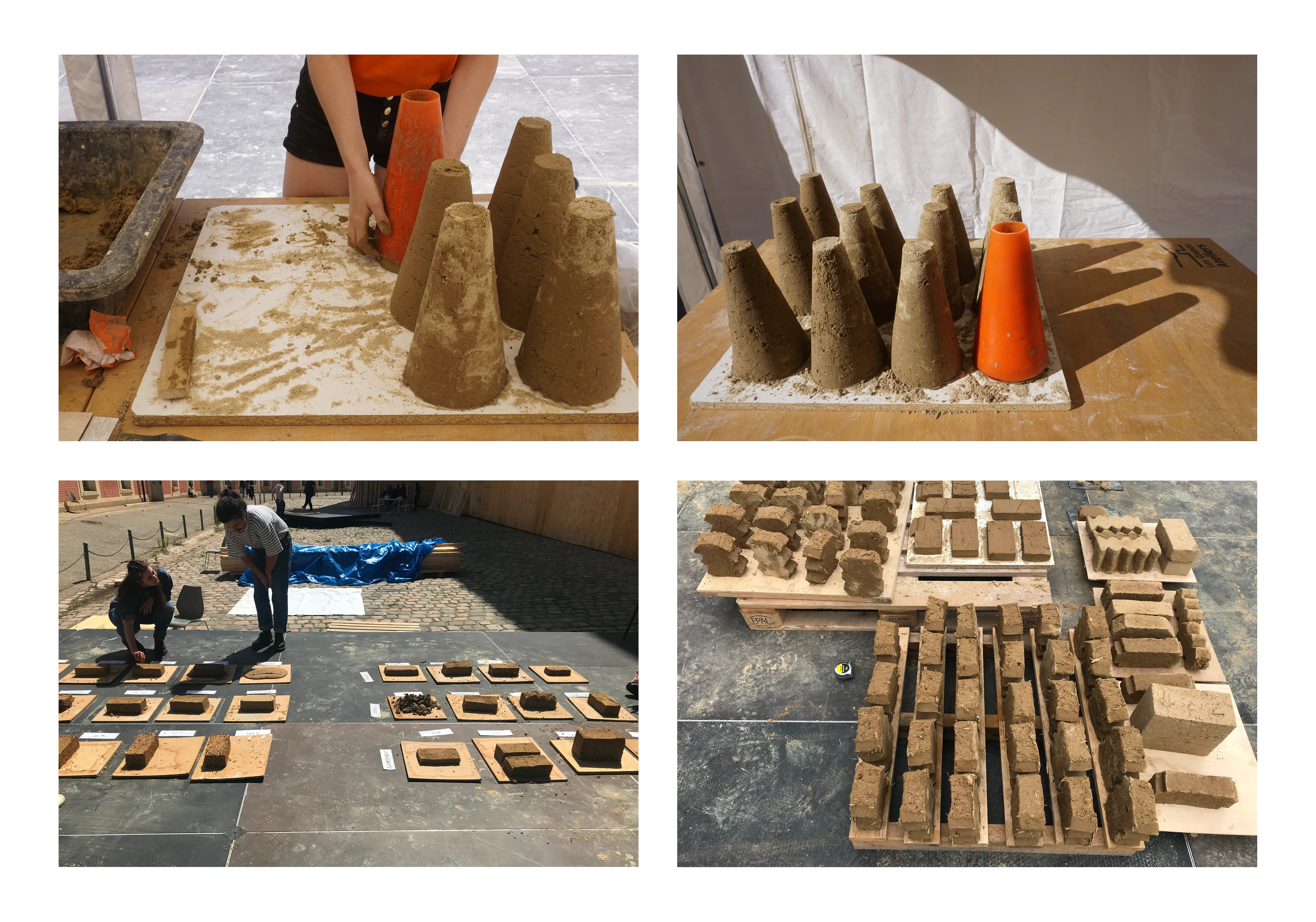
Mix tests and moulding of the adobe bricks.
This training was a chance for me to discover the theory and the many uses of raw earth, and to practise making adobe bricks.
We began by testing different variations of mix and technique: the amount of water, the sand-to-earth ratio, the proportion of fibres (straw and rice husk), the way of forming the brick (throwing, pouring, moulding, compacting) and its size. Then we could make our own bricks, in whatever shape and technique we wanted. My team made cone-shaped bricks, and had fun exploring the assembly options that this unusual form allows.
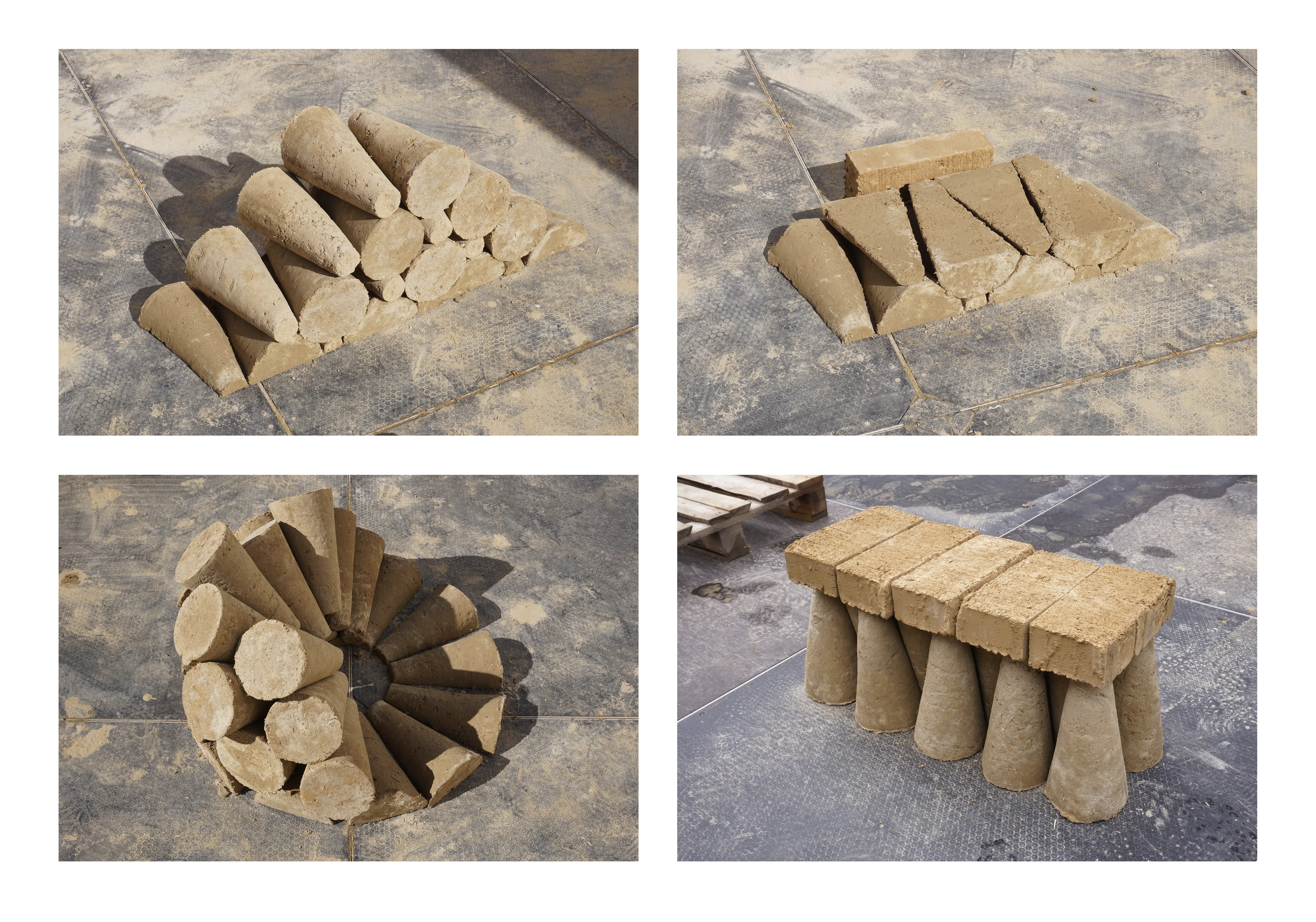
The cone bricks, assembled into small structures.